MTA and routing
P1 peers, O/R Address routing, route priority, and forwarding to local or remote destinations.

ATSMHS · X.400 · X.500
High-reliability Exchange, Routing and Messaging Operational Daemon
Aeronautical messaging, brought together in one platform.
HERMOD is the ATS Message Server of the SOPHIA suite. It combines MTA, Message Store, directory services and operational supervision in a Linux architecture designed for service continuity and integration with AMHS environments.
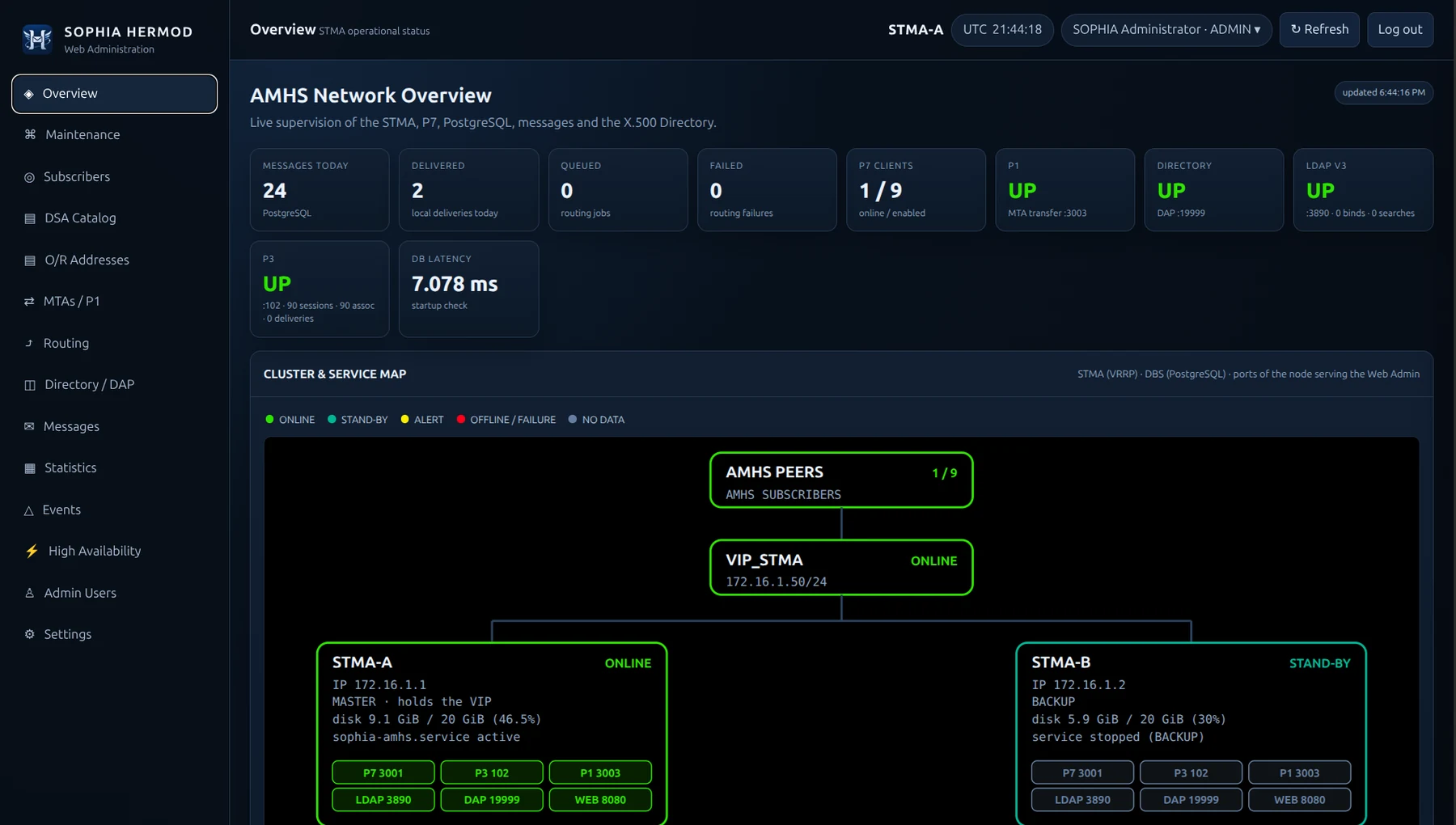
ATSMHS Core
A single foundation for transfer, access, storage, addressing and administration of aeronautical messages — with centralized configuration and a clear operational view of the environment.
P1 peers, O/R Address routing, route priority, and forwarding to local or remote destinations.
MTS and Message Store access services for integration with AMHS terminals and applications.
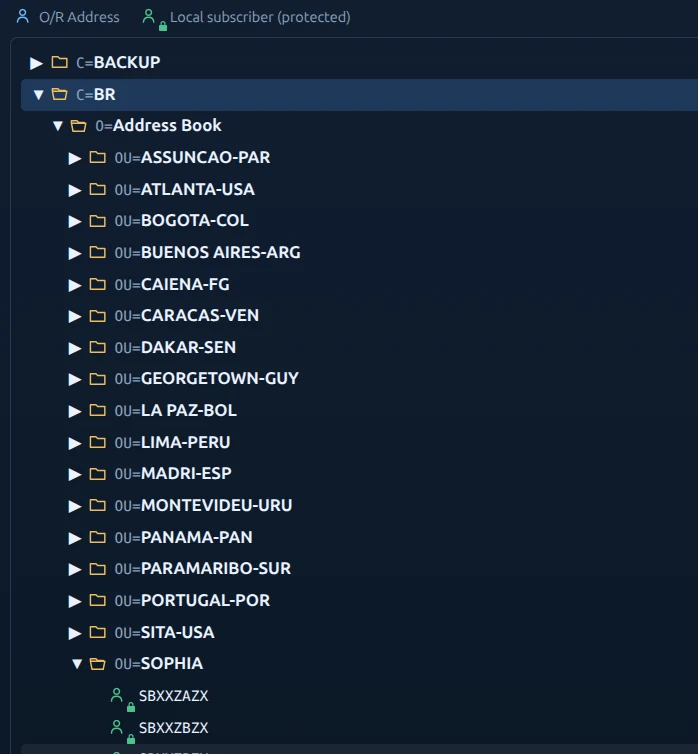
Hierarchical O/R Address catalogue, DAP access and a complementary LDAP interface for integration and administration.
Service health, statistics, events, queues, subscribers and infrastructure in a unified interface.
HERMOD's ATSMHS core is developed and maintained by SOPHIA ATC, with direct control over protocols, routing and messaging services. No reliance on proprietary X.400 middleware, recurring subscriptions or third-party commercial components in the messaging core.
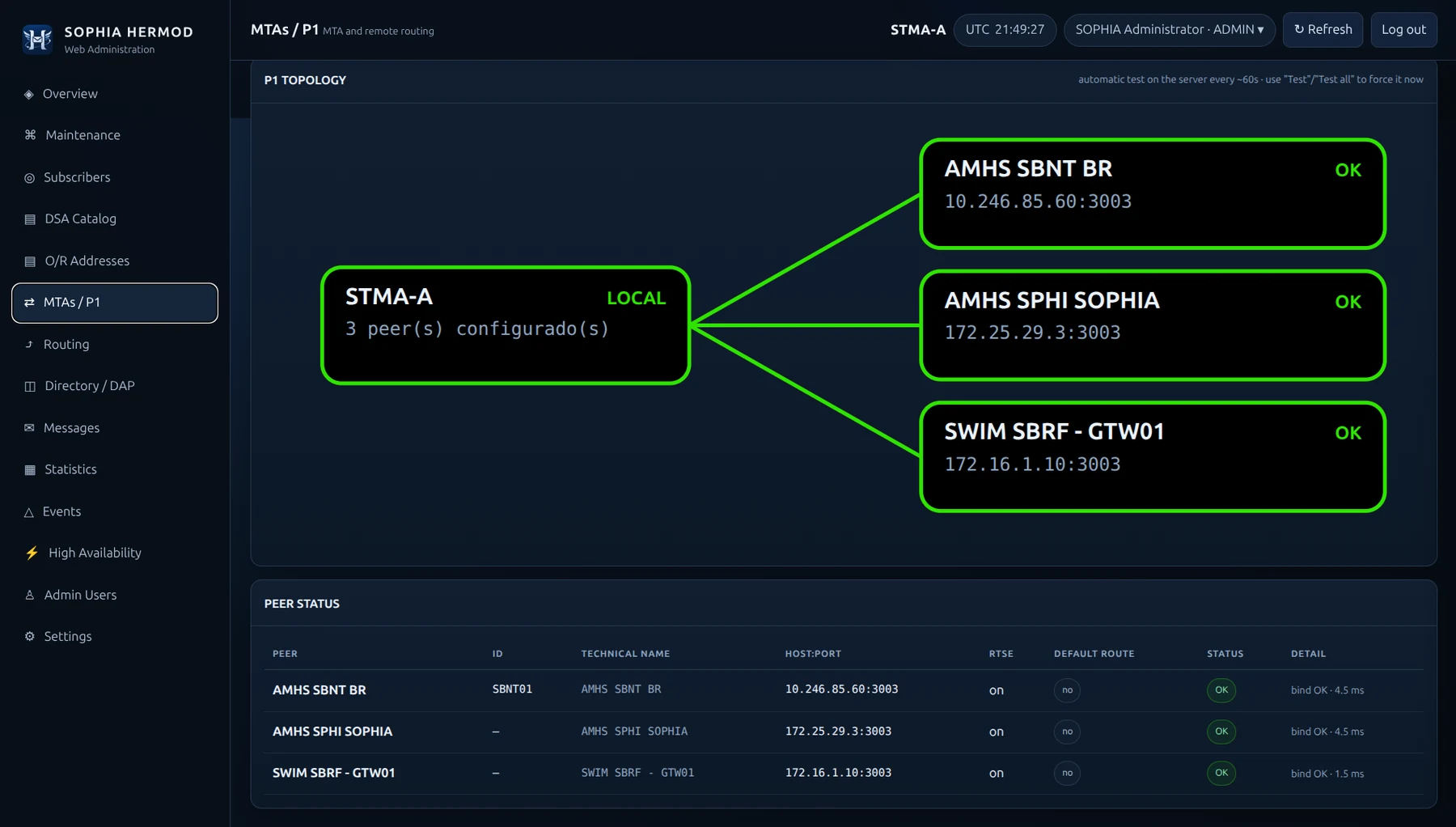
Unified Management
The WebAdmin brings together the elements that matter to technical operations: connections, peers, subscribers, directory, routing, messages, statistics, events and high availability.
Deployment
The architecture can be sized to the organization's needs while preserving the same application and administration layer.
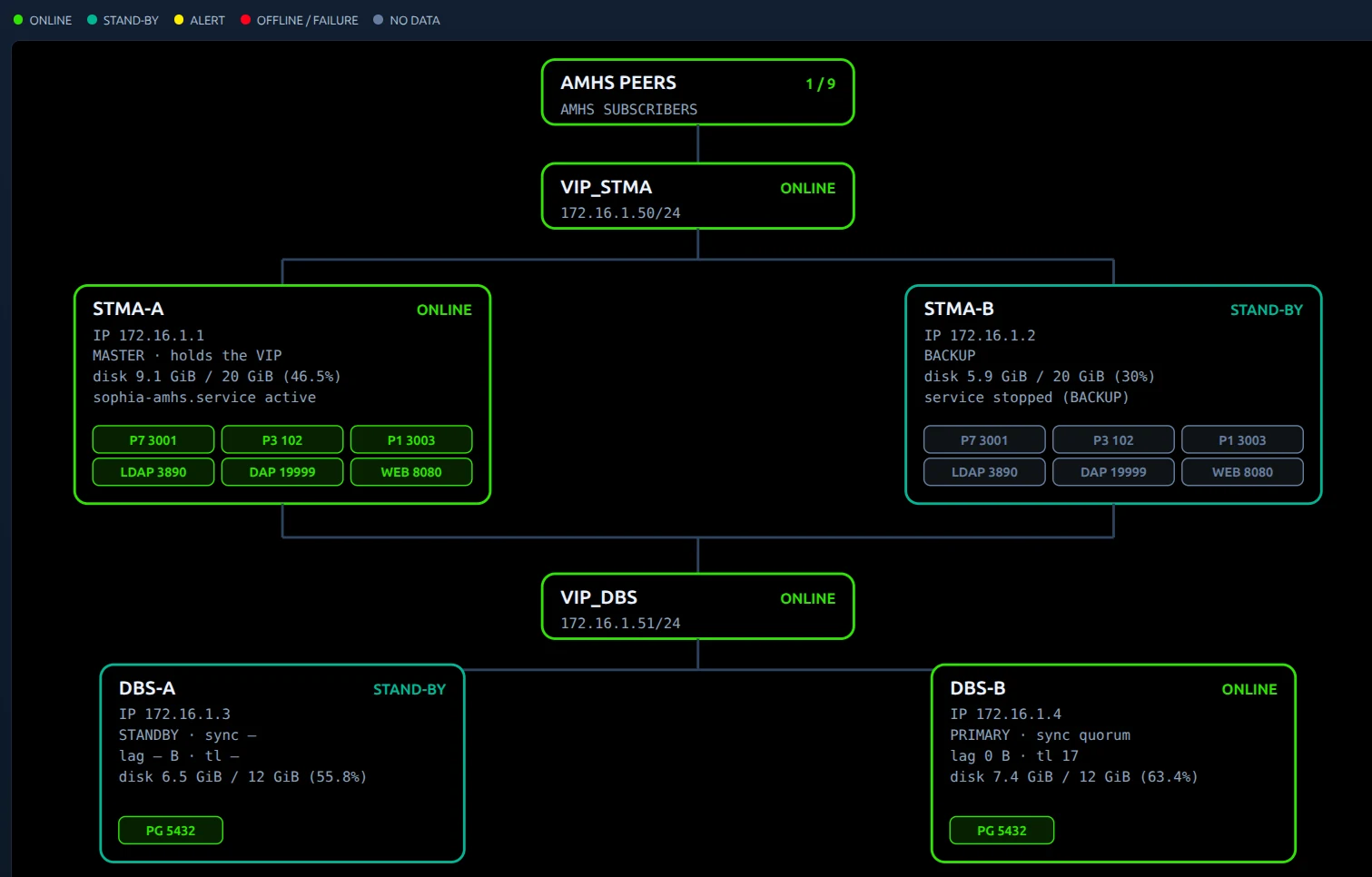
Reference architecture
HERMOD can be deployed in redundant topologies with separation between application services, databases, supervision and network access. The architecture can be sized to each operational environment while preserving centralized administration and room for expansion.

Standards alignment
HERMOD is developed with reference to the profiles and specifications applicable to the ATS Message Handling Service.
Technical reference for ATSMHS and directory services in the ATN/OSI environment.
European references for AMHS profiles and system interconnection.
X.411, X.413 and X.419 for message transfer, storage and service access.
OSI transport over TCP/IP and directory structures for integration with aeronautical infrastructures.
Standards references describe the engineering basis observed in product development and do not constitute a statement of external certification.
Operational view
A restrained technical interface designed for a fast reading of system status and direct administration of the main AMHS objects.
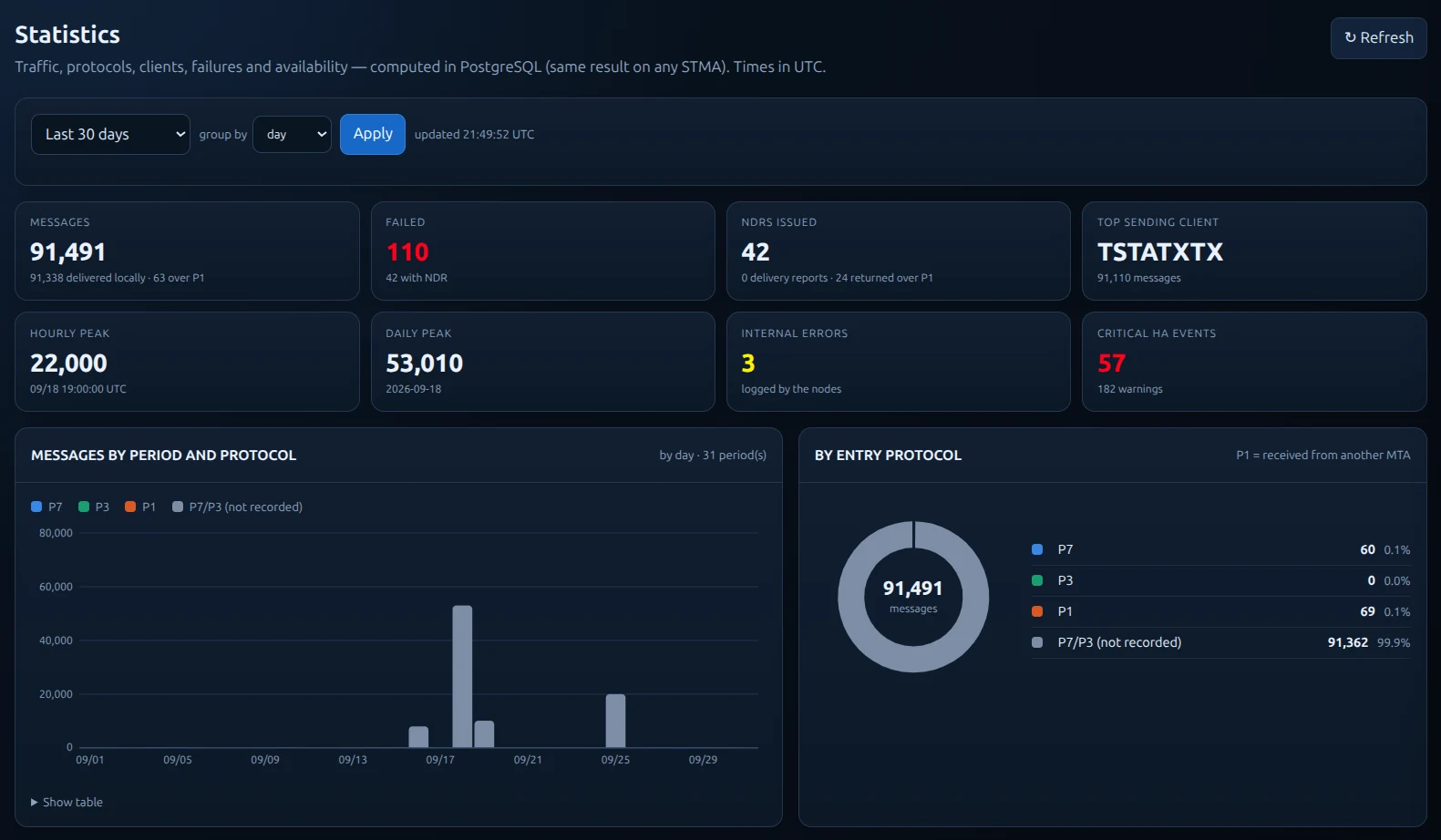
HERMOD combines messaging, routing, directory services and supervision in a single platform, with deployment options ranging from compact installations to redundant architectures.