An advanced system for Approach Control (APP) that integrates high-resolution meteorology, operational data, and real-time alerts to expand situational awareness.
SOPHIA APP was designed to support approach units with an integrated view of the operational scenario, reducing the need for scattered consultation across multiple parallel sources.
By bringing together meteorology, alerts, geospatial information, and decision-critical elements into a single visualization point, the system helps sustain faster, more consistent, and more documentable responses.
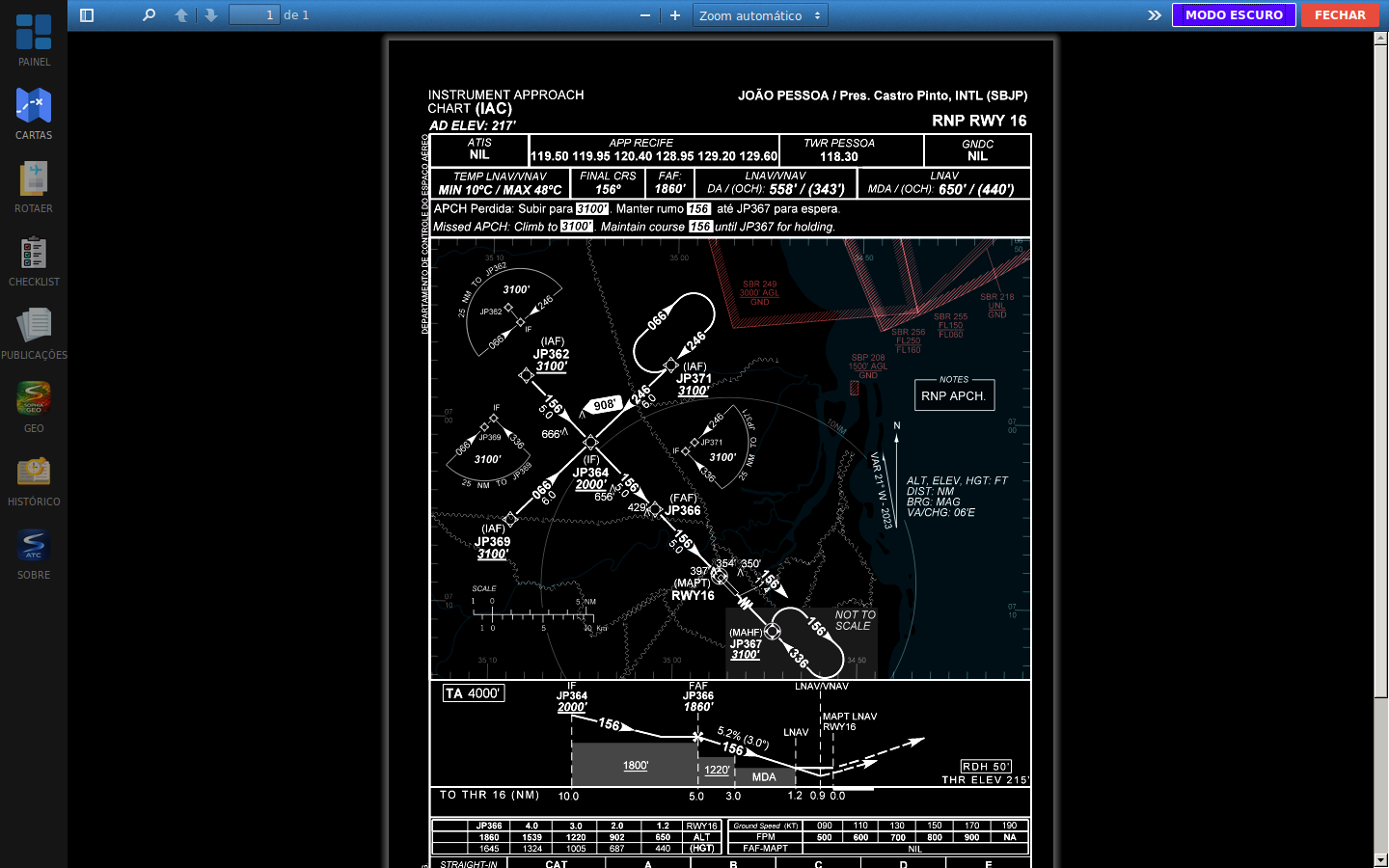
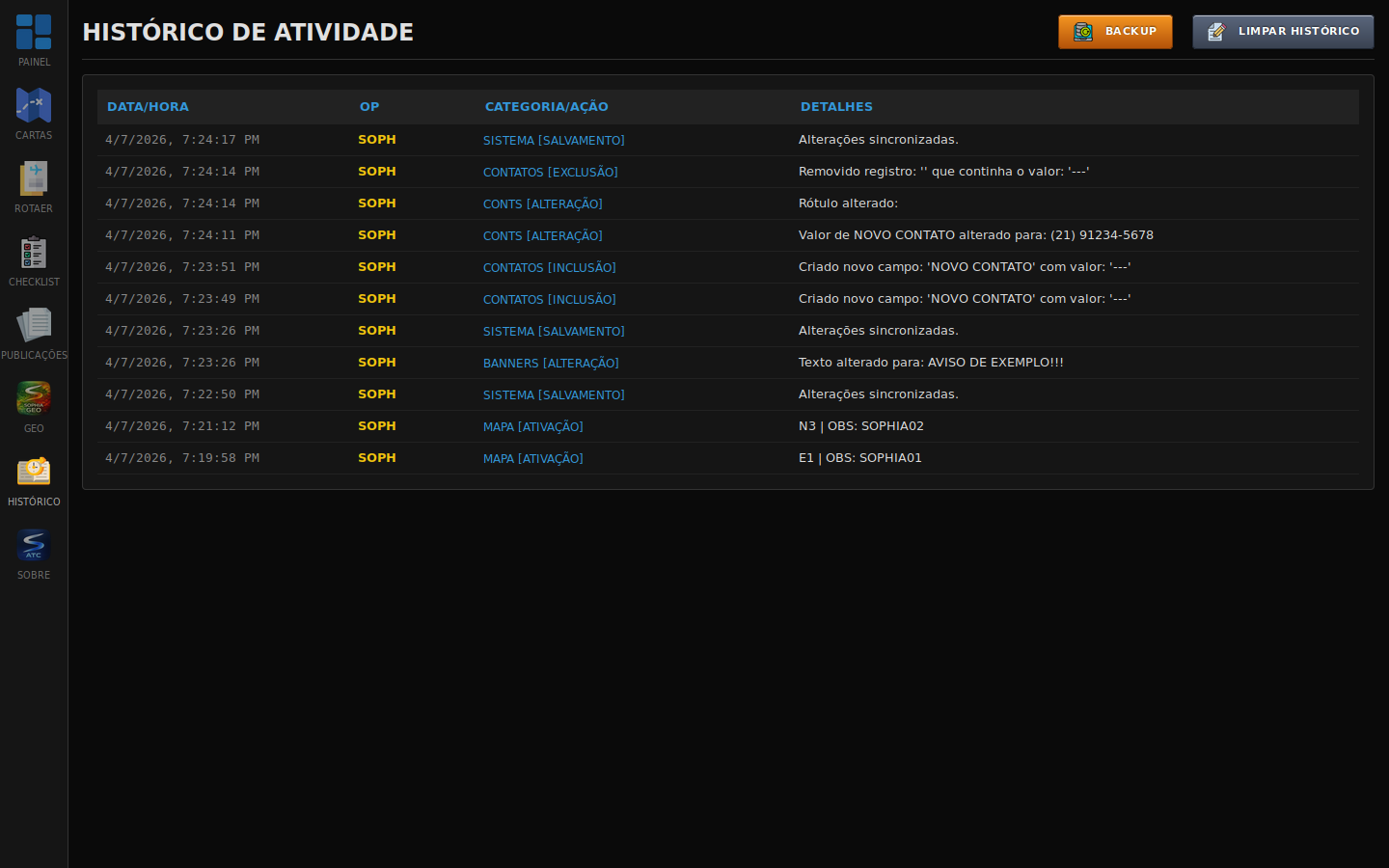
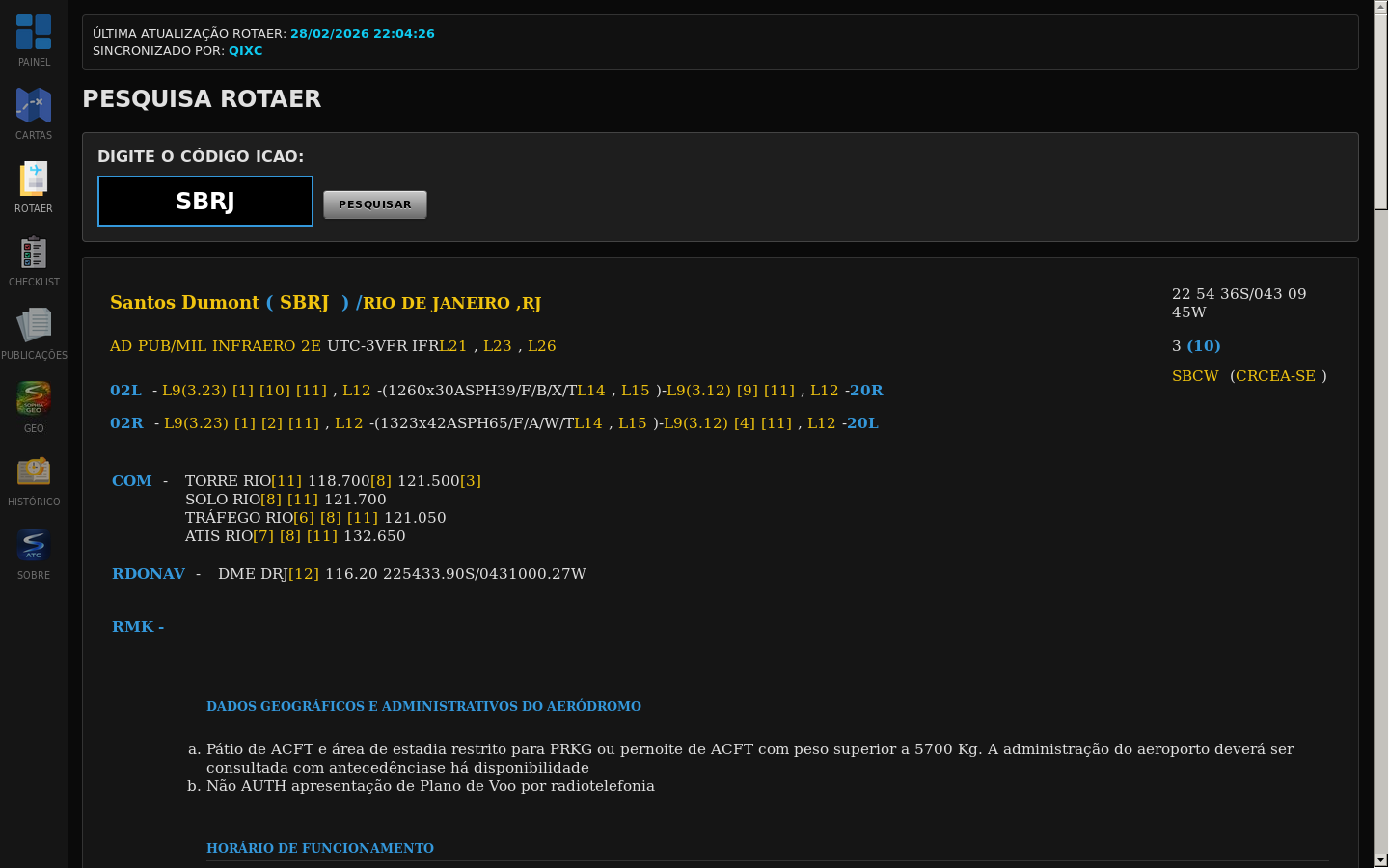
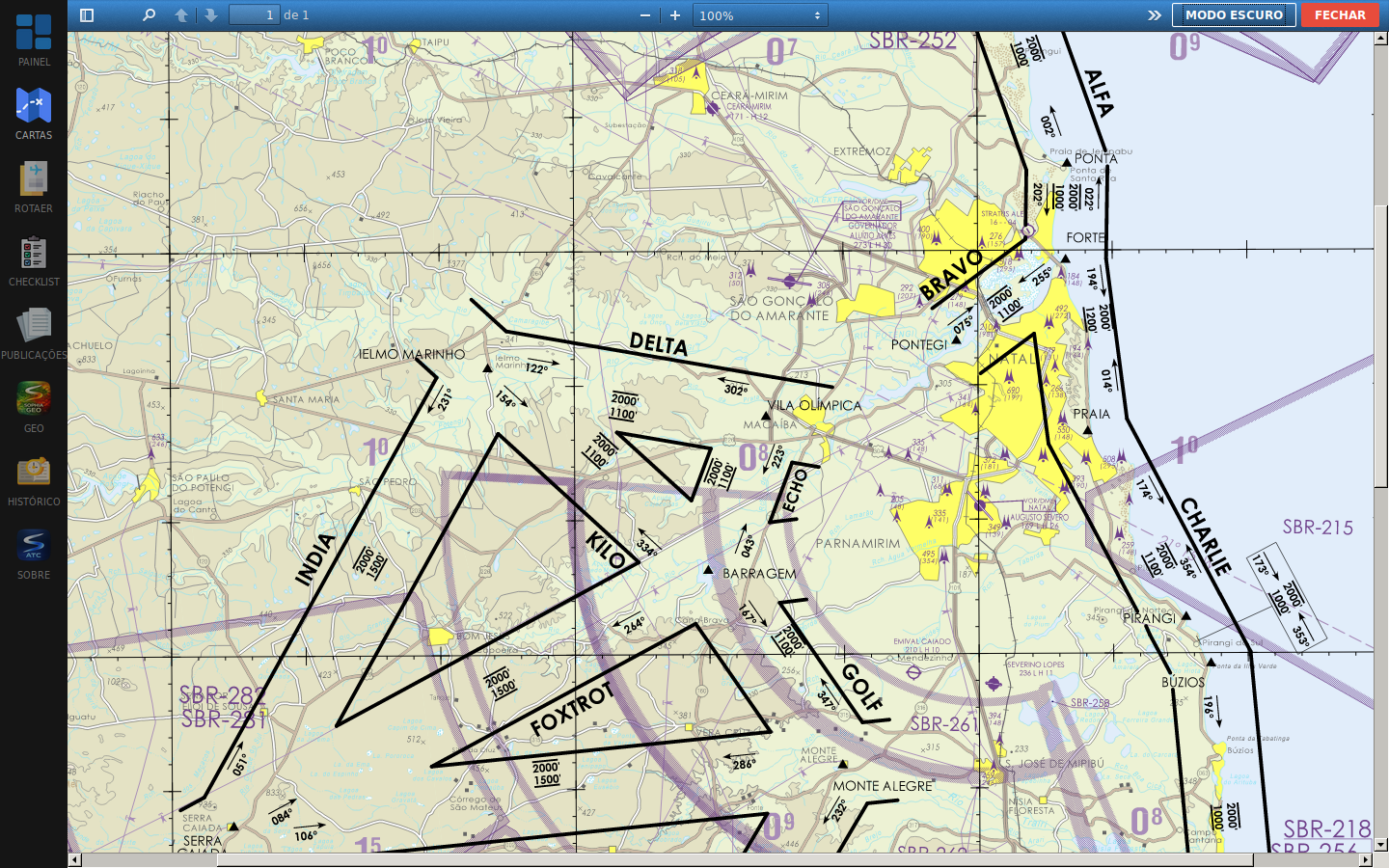
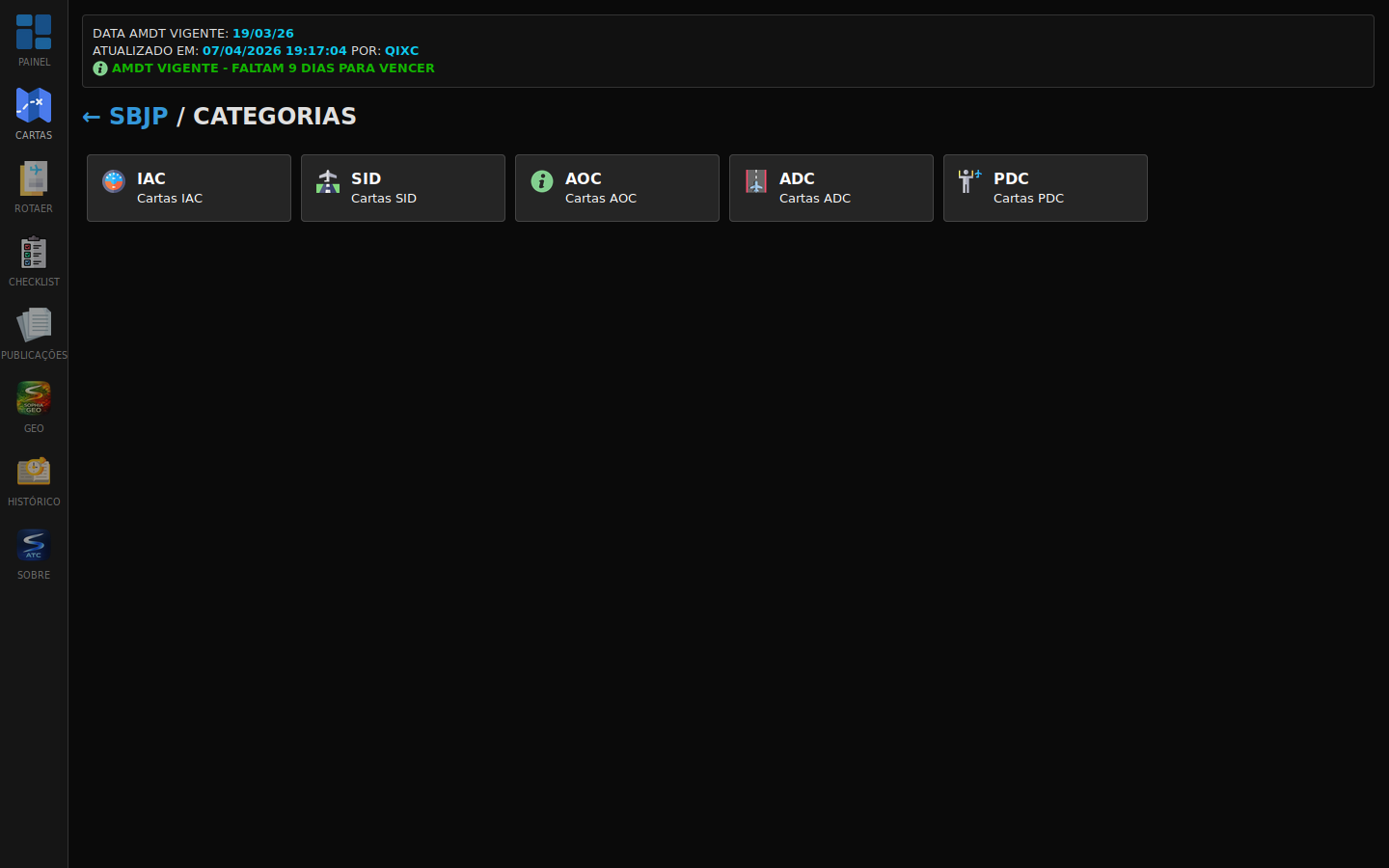
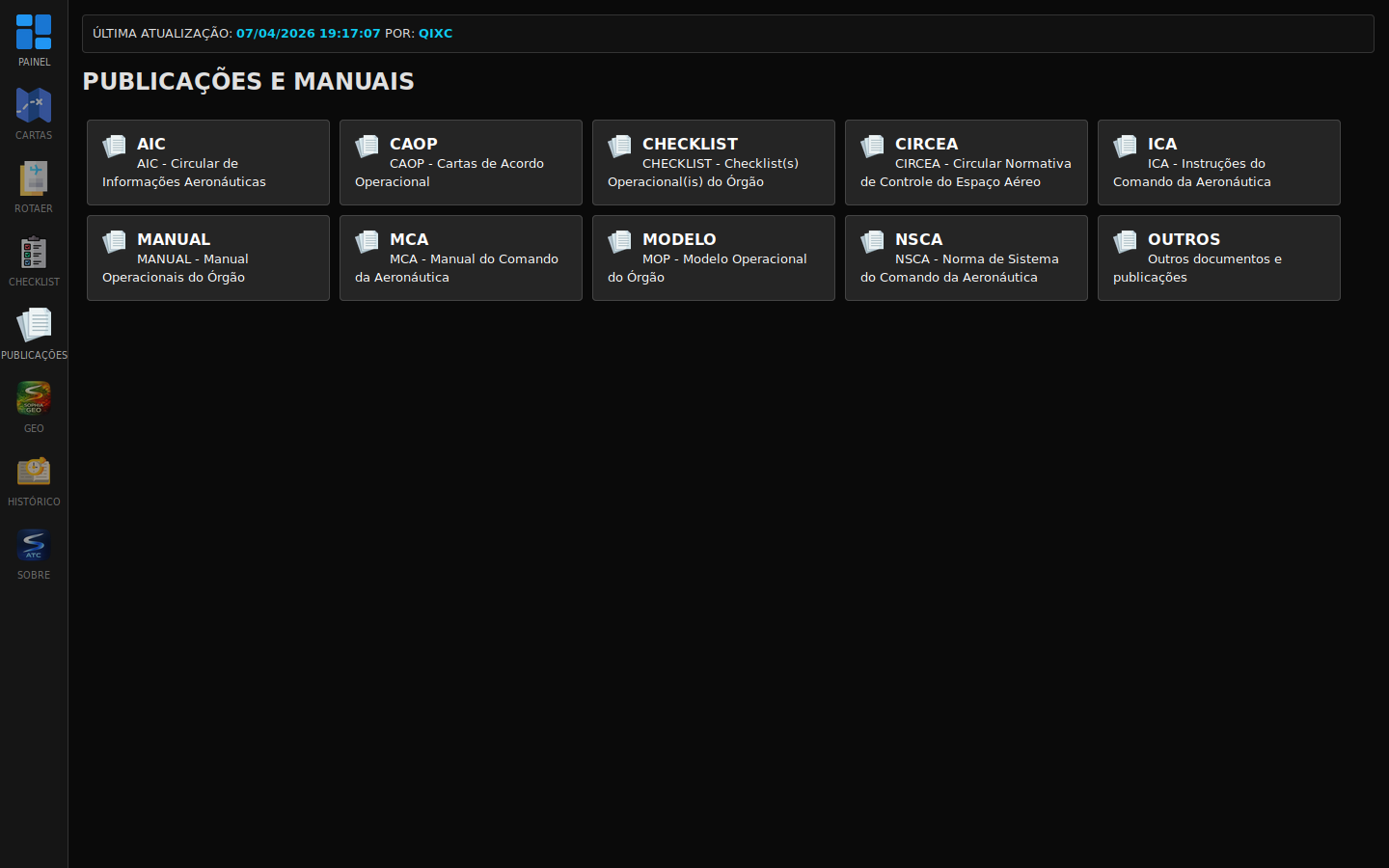
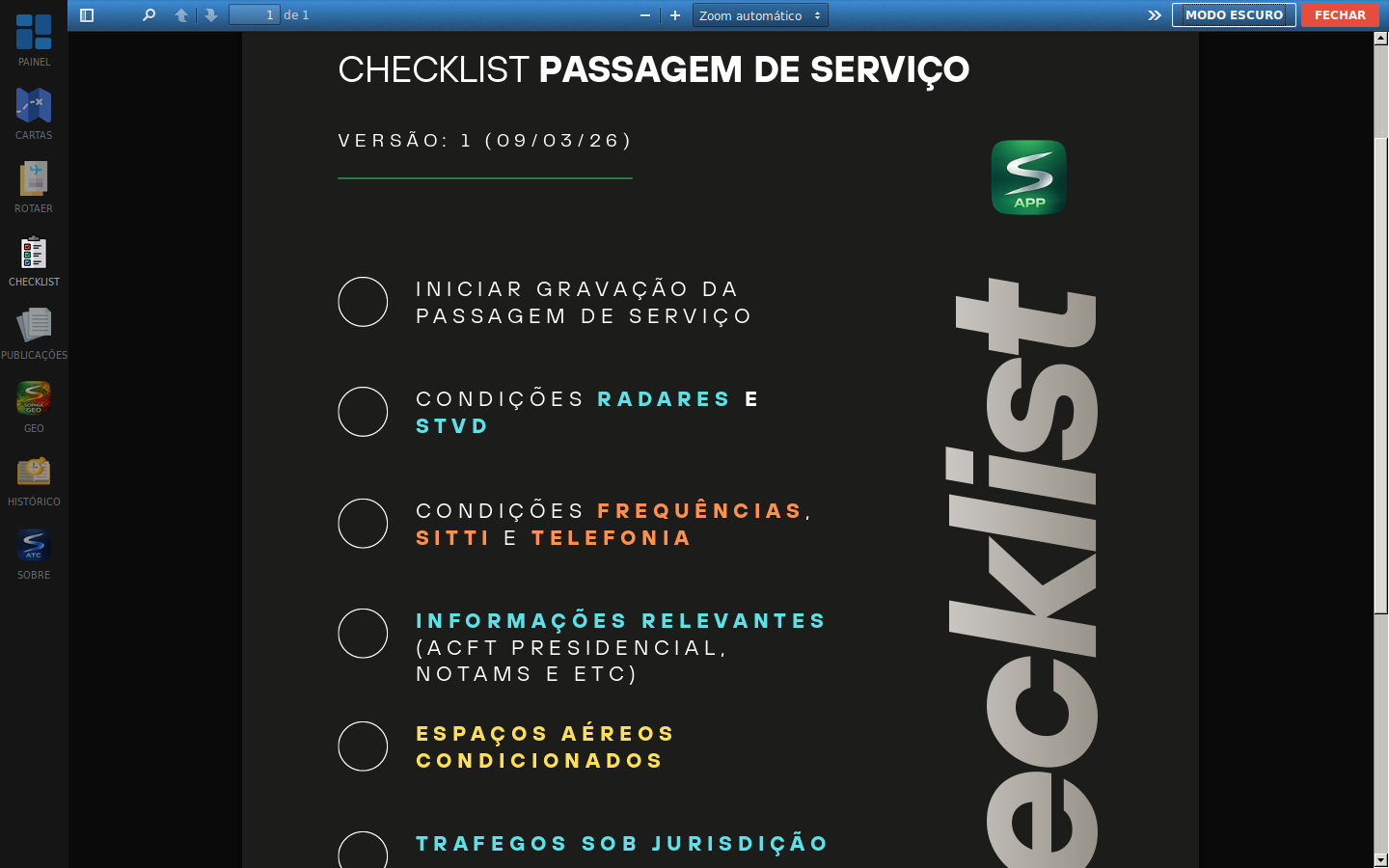
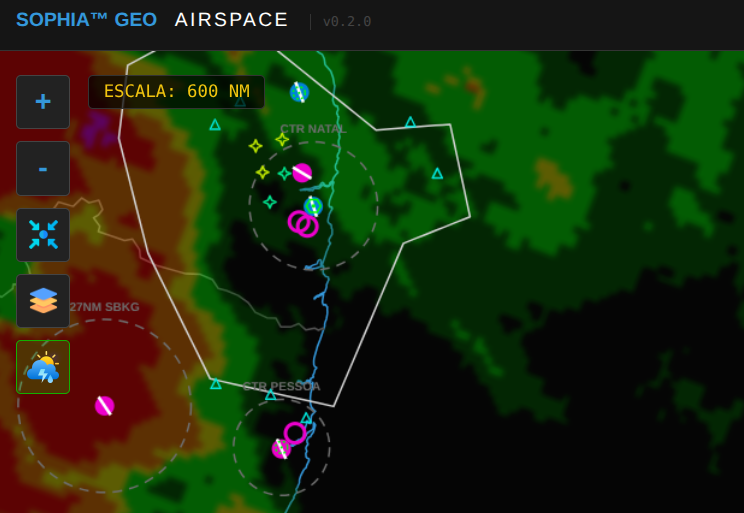
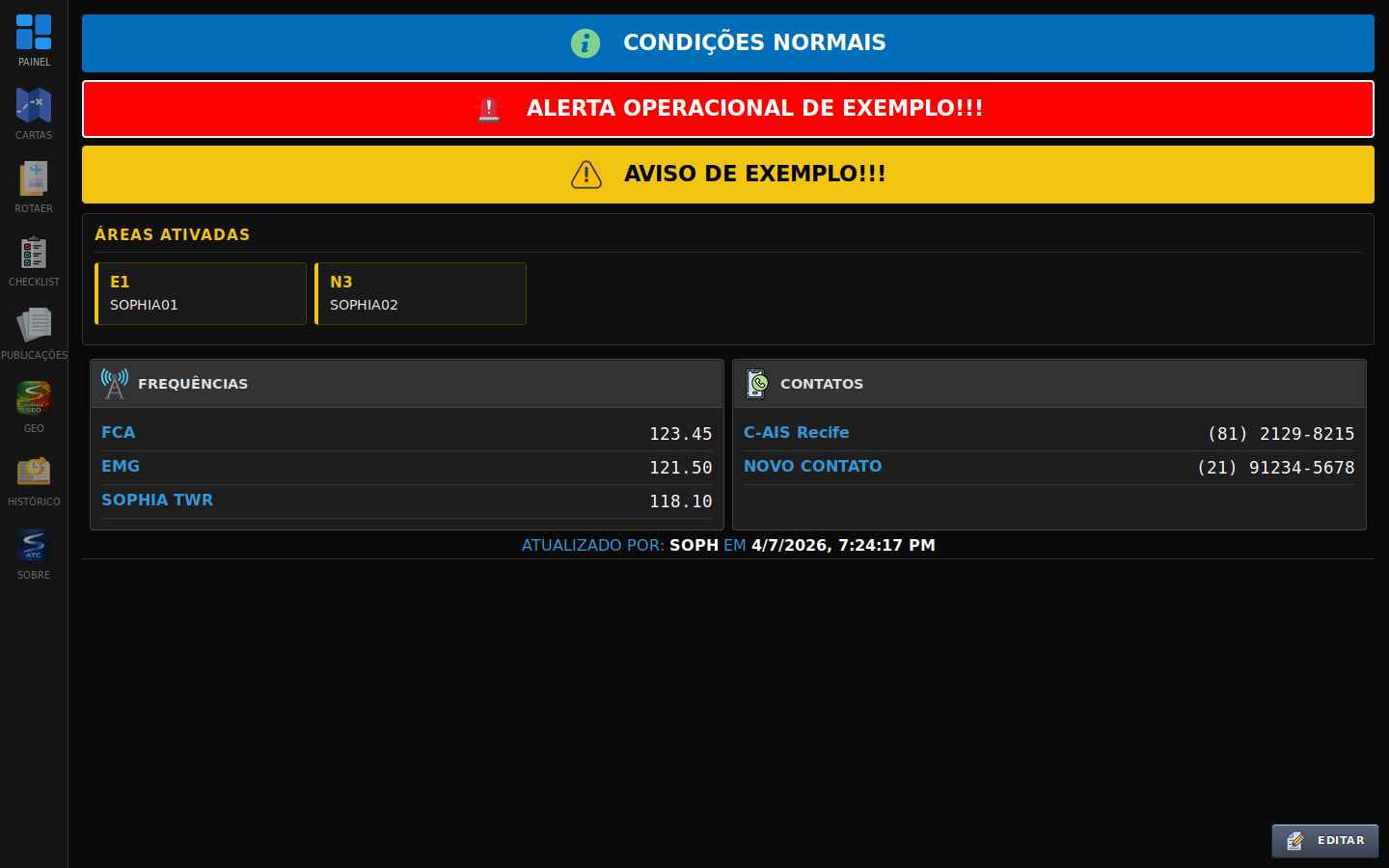
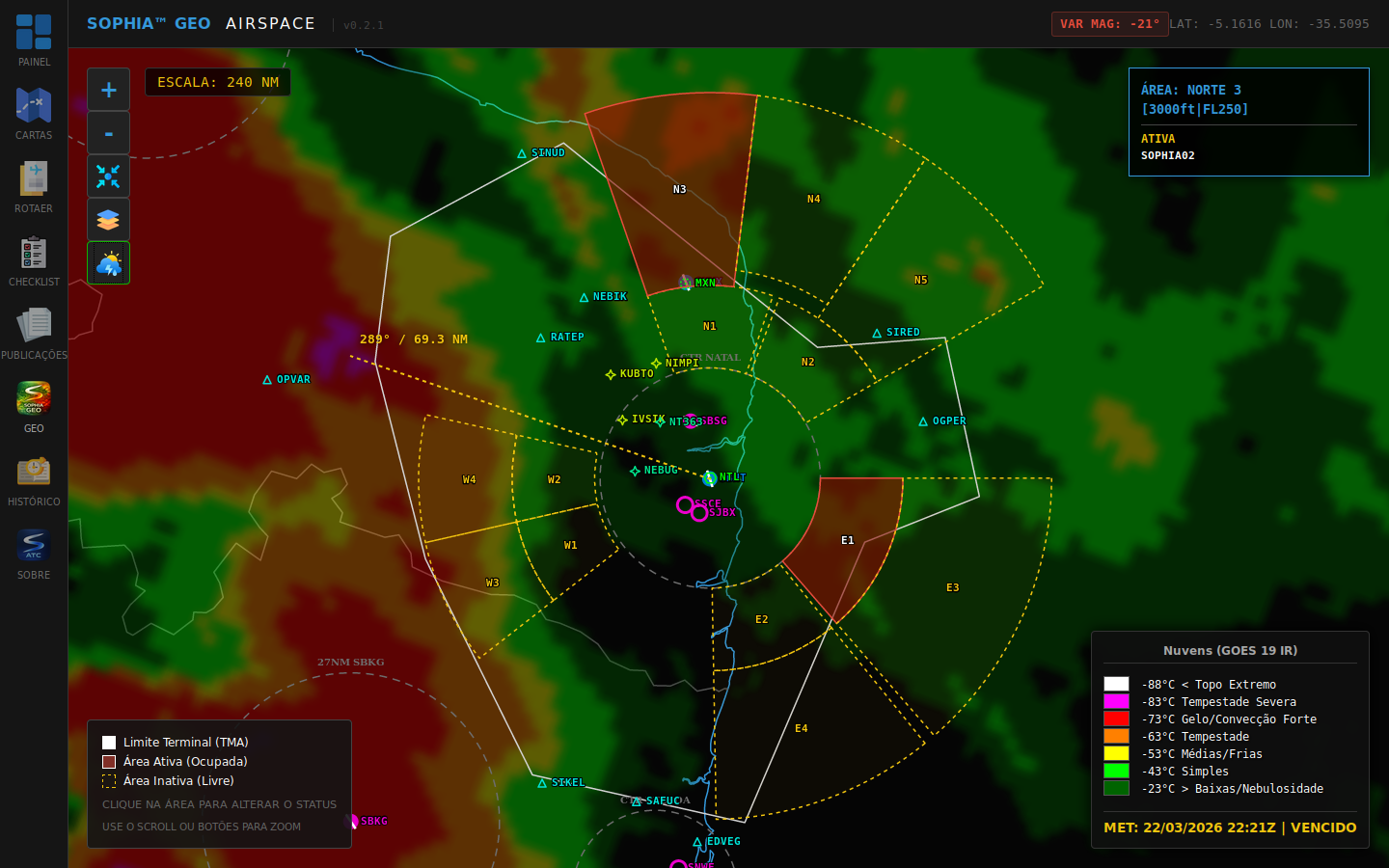
A lightweight set of screens to illustrate the system experience, highlighting the main panel, geospatial view, graphical analysis, and operational history.
Main panel with an integrated scenario view and quick reading of the operational context.
Move through the screens with the side arrows or click any thumbnail to open it directly. Clicking the main image opens it enlarged with a blurred background.
GOES 19 meteorological pipeline
The SOPHIA GEO differentiator inside the SOPHIA APP ecosystem lies in the controlled collection flow of GOES 19 (Geostationary Operational Environmental Satellite) imagery, obtained through NOAA (National Oceanic and Atmospheric Administration), the same reference source used by platforms such as INPE (National Institute for Space Research) and REDEMET (Aeronautics Command Meteorology Network), DECEA's aeronautical meteorology portal. From this reliable origin, the system processes the raw cloud data and delivers the already processed image for immediate operational reading.
From raw file reception to the operational product displayed on the console.
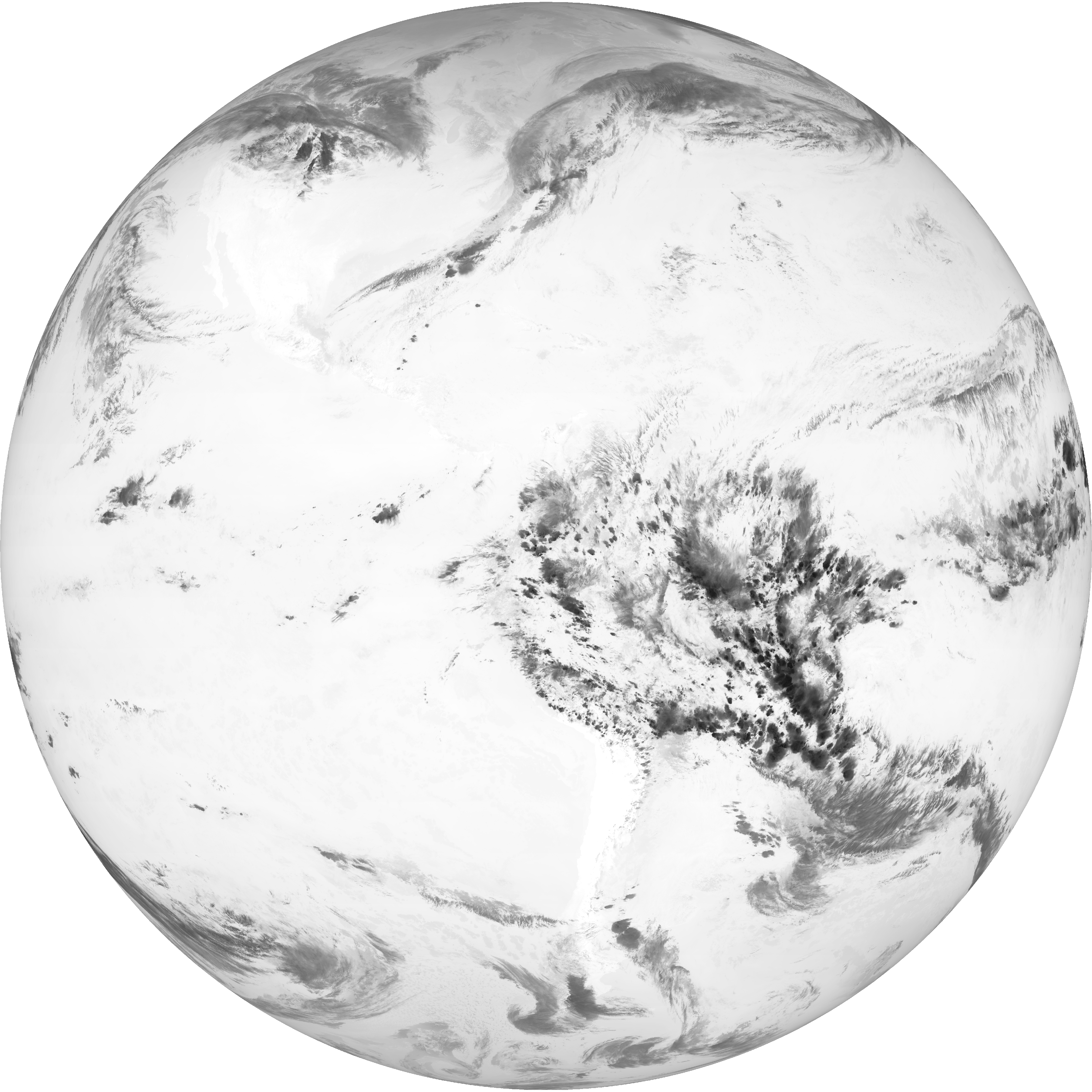
SOPHIA GEO obtains GOES 19 data in raw format, preserving the integrity of the original meteorological information.
Collection enters through a segregated layer, with network protection and a dedicated server for secure ingestion of the meteorological package.
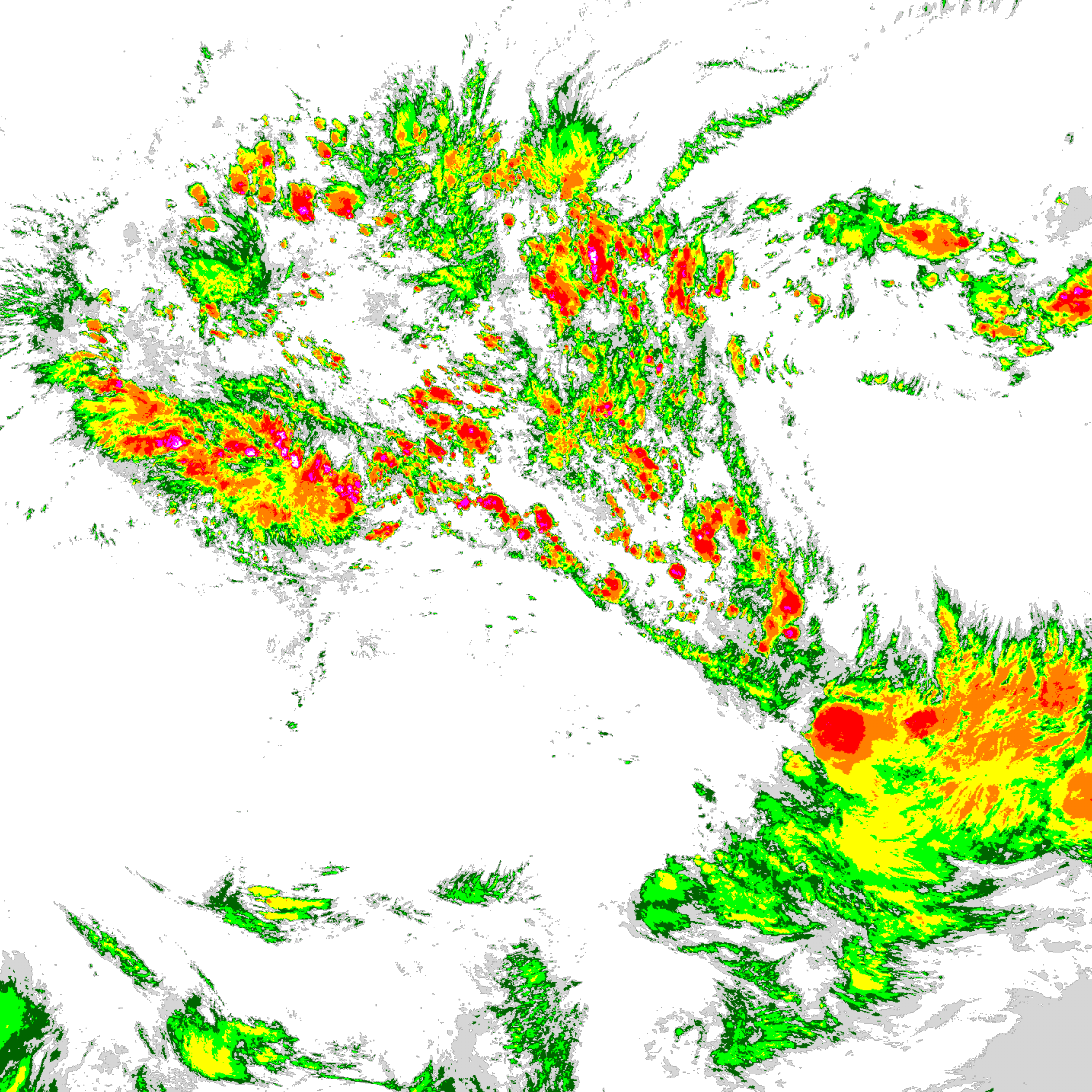
Cloud `netCDF4` data is decoded, processed, and converted into a highly readable visual product for the operational scenario.
The processed image is made available to the operator in SOPHIA, ready for immediate interpretation and decision support.
Visualization of the raw content received by the system before final composition, highlighting the technical stage of obtaining and reading meteorological data.
After post-processing, the data becomes a more expressive visual product, with better contrast and quick reading for meteorological analysis.
The emphasis is to show that SOPHIA does not merely display a static image: it receives satellite data, processes raw cloud content, and delivers the result inside an operational-use environment.
Technology oriented toward safety, quick scenario reading, and continuous support for operational decision-making.
Efficient management of aircraft in descent and final approach phases, with contextual support for traffic reading and flow organization.
Direct access to high-resolution meteorological data supported by the GOES 19 satellite, increasing predictability within the operational scenario.
Geospatial visualization of traffic, meteorology, and attention points within the same panel, reducing information fragmentation.
Proactive notifications about critical changes, potential conflicts, and meteorological events relevant to the operation.
SOPHIA APP was structured to operate in critical environments, focused on reliability, speed, and consistent support for controller work.
The product proposal is to transform excessive parallel consultation into quick context reading while preserving focus and traceability.
Structured collection and processing of operational and meteorological inputs relevant to the approach scenario.
Quick-reading panels organized to reduce attention dispersion and improve interpretation of the ongoing context.
Recording of events and interactions to support auditing, investigation, and continuous operational maturity.
Get in touch to schedule a demonstration and show how the system can support ATS operations with more context and predictability.